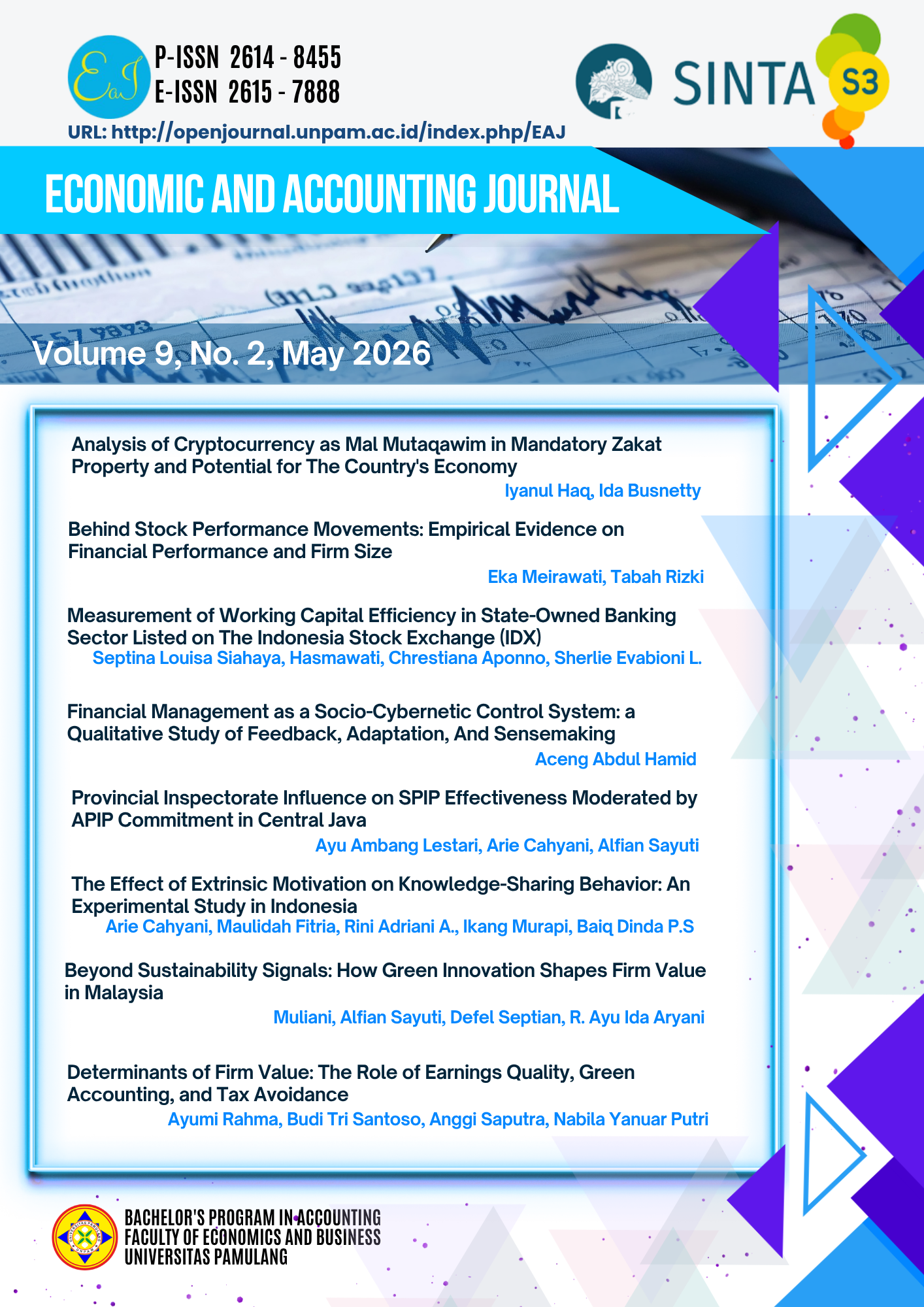
Analysis Of Cryptocurrency As Mal Mutaqawim In Mandatory Zakat Property And Potential for The Country's Economy
DOI:
https://doi.org/10.32493/eaj.v9i2.y2026.p96-105Keywords:
Cryptocurrency , Mal Mutaqawim, Zakat, Digital EconomyAbstract
The rapid development of the digital economy has given rise to new innovations, one of which is digital currency or cryptocurrency, which has become a topic of debate in Islamic law, particularly regarding its status as mal mutaqawim (assets of sharia value) and its implications for the obligation of zakat mal. This study aims to analyze the position of cryptocurrency in the context of assets subject to zakat and its potential as a zakat instrument in the digital era. Using descriptive qualitative methods and literature analysis of fatwas, scientific journals, and the views of contemporary scholars, the results show that some scholars recognize cryptocurrency as mal mutaqawim due to its recognized exchange value and legitimate use as long as it is not for prohibited transactions. Therefore, cryptocurrency has the potential to become an object of zakat mal that is relevant to the development of the national economy in the digital era.
References
Abdul Wahab, H., Habbe, A. H., & Nouruzzaman, A. (2023). Cryptocurrency in Islamic economic principles. Dinasti International Journal of Education Management and Social Science, 3(2), 245–258.
Al-Kasani. (2001). Bada’i al-sana’i fi tartib al-shara’i. Beirut: Dar al-Kutub al-‘Ilmiyyah.
Al-Qaradawi, Y. (2006). Fiqh az-zakat: A comparative study of zakah, regulations and philosophy in the light of the Qur’an and Sunnah (Vol. 1). Beirut: Mu’assasah ar-Risalah.
Alawialbantani. (2018). Konsep mal mutaqawim dalam fiqh muamalah dan relevansinya terhadap aset kontemporer. Jurnal Fiqh Muamalah, 5(2), 77–90
Ariffin, N. (2021). Fiqh digital asset: A maqasidic perspective. Journal of Islamic Finance Studies, 8(2), 45–59.
As-Suyuthi, J. (1998). Al-asybah wa an-nazhair fi qawa’id wa furu’ fiqh asy-syafi’iyyah. Beirut: Dar al-Kutub al-‘Ilmiyyah.
Badan Pengawas Perdagangan Berjangka Komoditi. (2024). Laporan tahunan perdagangan aset kripto di Indonesia 2020–2024. Jakarta: Kementerian Perdagangan Republik Indonesia.
Baznas. (2024). Zakat digital dan aset kripto: Kajian fiqh dan potensi penerimaan zakat di era ekonomi digital. Jakarta: Pusat Kajian Zakat Nasional.
DSN-MUI. (2021). Fatwa Nomor 114/DSN-MUI/IX/2021 tentang aset kripto sebagai komoditas dan alat investasi syariah.
Himjournals. (2024). Analisis aset kripto dalam perspektif ekonomi Islam. Himalayan Journal of Economics and Finance, 5(1), 33–52.
Kato, A. (2022). Zakat mal as an instrument of redistribution in the Islamic economic system. Journal of Islamic Finance and Development, 11(4), 201–218.
Majlis Fatwa Malaysia. (2022). Resolution on cryptocurrency investment. Putrajaya.
Muneeza, A., & Ismail, M. (2023). Blockchain-based waqf: Towards digital transparency in Islamic social finance. Journal of Islamic Accounting and Finance Research, 5(1), 23–39.
Naz, S. (2024). Examining the adoptability of cryptocurrency in the Islamic financial system: Perspectives from shari’ah scholars. Journal of King Abdulaziz University: Islamic Economics, 37(2), 75–98.
Prasetiyo, A., & Janah, R. A. (2024). Analisis cryptocurrency sebagai alat tukar dalam perspektif syariah. At-Kato, A. (2022). Zakat mal as an instrument of redistribution in the Islamic economic system. Journal of Islamic Finance and Development, 11(4), 201–218.
Majlis Fatwa Malaysia. (2022). Resolution on cryptocurrency investment. Putrajaya.
Muneeza, A., & Ismail, M. (2023). Blockchain-based waqf: Towards digital transparency in Islamic social finance. Journal of Islamic Accounting and Finance Research, 5(1), 23–39.
Naz, S. (2024). Examining the adoptability of cryptocurrency in the Islamic financial system: Perspectives from shari’ah scholars. Journal of King Abdulaziz University: Islamic Economics, 37(2), 75–98.
Prasetiyo, A., & Janah, R. A. (2024). Analisis cryptocurrency sebagai alat tukar dalam perspektif syariah. At-Tahrir: Jurnal Pemikiran Islam, 24(1), 45–61.
Qaradawi, Y. (2000). Fiqh al-zakah. Beirut: Mu’assasah al-Risalah.
Rosele, M. I., & Ali, A. K. (2025). Cryptocurrency as zakatable wealth in contemporary fiqh. International Journal of Islamic Economics and Finance, 9(1), 77–98.
Sekaringsih, R. B., & Al-Banna, H. (2022). Does a cryptocurrency comply with shariah? Empirical evidence from ARCH-GARCH economic model. Global Review of Islamic Economics and Business, 10(2).
Wahbah al-Zuhaili. (2021). Al-fiqh al-islami wa adillatuhu (Vol. 4). Damascus: Dar al-Fikr.
Additional Files
Published
Issue
Section
License
Copyright (c) 2026 Iyanul Haq, Ida Busnetty

This work is licensed under a Creative Commons Attribution-ShareAlike 4.0 International License.
Authors who publish with this journal agree to the following terms:
- Authors retain copyright and grant the journal right of first publication with the work simultaneously licensed under a Creative Commons Attribution License that allows others to share the work with an acknowledgement of the work's authorship and initial publication in this journal.
- Authors are able to enter into separate, additional contractual arrangements for the non-exclusive distribution of the journal's published version of the work (e.g., post it to an institutional repository or publish it in a book), with an acknowledgement of its initial publication in this journal.
- Authors are permitted and encouraged to post their work online (e.g., in institutional repositories or on their website) prior to and during the submission process, as it can lead to productive exchanges, as well as earlier and greater citation of published work (See The Effect of Open Access).

This work is licensed under a Creative Commons Attribution-ShareAlike 4.0 International License.
 PUBLICATION ETHICS
 FOCUS AND SCOPE
 EDITORIAL TEAM
 REVIEW PROCESS
 CONTACT US
 AUTHOR GUIDELINES